
Basic Elements of Grammar
Hebrew is a language with a unique structure and characteristics. Before delving into vocabulary, phrases, and grammatical rules, it is essential to become familiar with its foundations: the alphabet, the vowel system (Nikud), writing direction, and the principles of the root system. These elements help lay a solid foundation for further language learning.
Hebrew Alphabet
The Hebrew alphabet consists of 22 letters, written in a single case—unlike Latin script, which distinguish between uppercase and lowercase letters. Hebrew does not have letters that represent vowel sounds, so most words are written only with consonants, and their correct pronunciation depends on context.
Hebrew Alphabet Table:
| Letter | Name | Pronunciation |
|---|---|---|
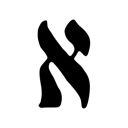 |
Aleph | Silent (varies depending on Nikud) |
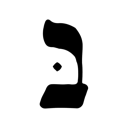 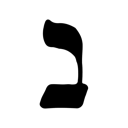 |
Bet | "B" (with a dot) / "V" (without a dot) |
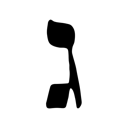 |
Gimel | "G" |
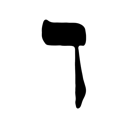 |
Dalet | "D" |
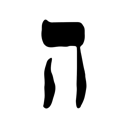 |
Hey | "H" (a soft aspirated sound) |
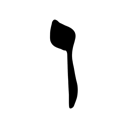 |
Vav | "V", sometimes "O" or "U" |
 |
Zayin | "Z" |
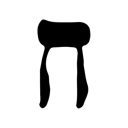 |
Chet | A guttural "H" (like the German "ch" in "Bach") |
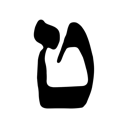 |
Tet | Hard "T" |
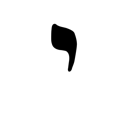 |
Yod | "Y", sometimes "I" |
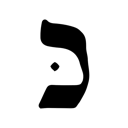 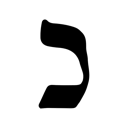 |
Kaf | "K" (with a dot) / "Kh" (without a dot) |
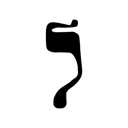 |
Lamed | "L" |
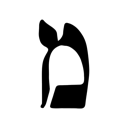 |
Mem | "M" |
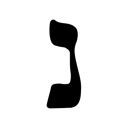 |
Nun | "N" |
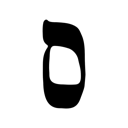 |
Samekh | "S" |
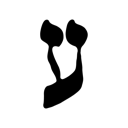 |
Ayin | Guttural sound (rarely pronounced in modern Hebrew) |
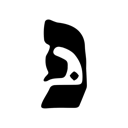 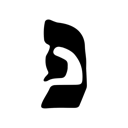 |
Pe | "P" (with a dot) / "F" (without a dot) |
 |
Tsadi | "Ts" |
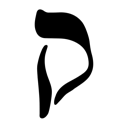 |
Kuf | "K" (deeper pronunciation, closer to the throat) |
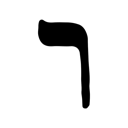 |
Resh | "R" (throaty sound) |
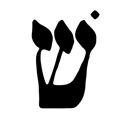 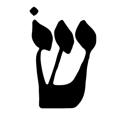 |
Shin | "Sh" (dot on the right) / "S" (dot on the left) |
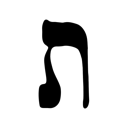 |
Tav | "T" |
Learning the alphabet is the first and most crucial step in mastering the language. Beginners are advised to practice writing the letters, combining them into words, and reading with the help of vowel marks.
Vowel Marks (Nikud)
Since Hebrew lacks letters representing vowel sounds, special diacritical marks called Nikud (נִקּוּד) are used for educational purposes. Nikud indicates the correct pronunciation of words and consists of dots and lines placed under, above, or inside letters.
Main Vowel Marks:
| Nikud | Name | Sound | Example |
|---|---|---|---|
 |
Kamatz | "A" | שָלוֹם (Shalom) |
 |
Tsere | "E" | בֵּית (Beit) |
 |
Hiriq | "I" | מִשְׁפָּחָה (Mishpacha) |
 |
Kubutz | "U" | סֻכָּה (Sukkah) |
 |
Shva | Silent or "E" | שְלוֹם (Shalom) |
In everyday texts, newspapers, and books, Nikud is not used, but it appears in educational materials, poetry, religious texts, and children's books.
Writing Direction
Hebrew is written from right to left, which can be challenging for those accustomed to the Latin alphabet. This rule applies not only to letters but also to punctuation and word order in sentences.
Example:
| Correct | שלום עולם |
| Incorrect | םולע םולש |
However, multi-digit numbers are read from left to right, similar to English. For example, the year 1984 is written 1984 in Hebrew and pronounced as "Elef Tesha Me'ot Shmonim Ve-Arba" (One thousand nine hundred eighty-four).
The Root System (שורשים)
One of the key features of Hebrew is the root system (שורשים, Shorashim). Almost all words in the language are built on a root consisting of three (sometimes four) consonants. This root conveys the fundamental meaning of the word, while prefixes, suffixes, and vowel changes create new words.
Example of the root כ-ת-ב (K-T-V), related to writing:
| Hebrew | Transliteration | Meaning |
|---|---|---|
| כָּתַב | Katav | He wrote (past tense verb) |
| כְּתִיבָה | Ktiva | Writing (the process) |
| מִכְתָּב | Mikhtav | Letter (as a document) |
| כָּתוּב | Katuv | Written |
Understanding the root system helps deduce the meaning of unfamiliar words, even without knowing their exact translation. For example, seeing the word נִכְתַּב(Nikhtav), one can guess it is related to writing and likely means "was written."
In Hebrew, most words can be broken down into a root and various affixes. For example:
| Hebrew | Transliteration | Meaning | Root | Notes |
|---|---|---|---|---|
| התלבש | Hitlabesh | He dressed himself | ל-ב-ש | Reflexive prefix הת-; root means "clothing" |
| מדבר | Medaber | He speaks | ד-ב-ר | Root means "word, speech" |
The root system significantly facilitates vocabulary acquisition and sentence construction. Once learners grasp the basic principles, they can expand their vocabulary and understand new words more easily without memorizing disconnected terms.
Conclusion
Mastering the Hebrew alphabet, the Nikud system, and the principles of the root system are essential steps in learning the language. Understanding these basic elements will aid in further studies of grammar, reading, and speaking. The next stage involves familiarization with essential parts of speech and sentence construction.
Practise this in the app. In Shoresh every textbook topic comes with trainers: verb conjugation, tenses, binyanim, the imperative and choosing the right word in a sentence.