
1. The Alphabet and Reading Rules
Hebrew is written from right to left, its letters stand for consonants only, and the vowels are hinted at by small marks. Before learning words and rules you need the foundations: the alphabet, the vowel points, the final letters, the dagesh and a handful of reading rules. This chapter replaces the first month of an ulpan.
The alphabet
The alphabet has 22 letters. All of them are consonants and there are no capital letters. Five letters change their shape at the end of a word (see below), and three pairs are pronounced differently depending on a dot inside the letter.
| Letter | Name | Pronunciation |
|---|---|---|
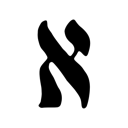 | Alef | silent; you hear the vowel under it |
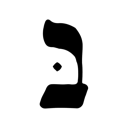 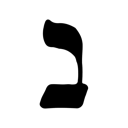 | Bet / Vet | “B” with a dot (בּ) / “V” without |
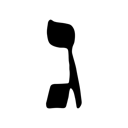 | Gimel | “G” as in go |
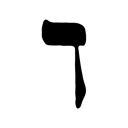 | Dalet | “D” |
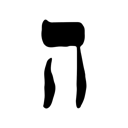 | He | “H”; usually silent at the end of a word |
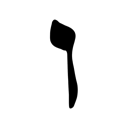 | Vav | “V”; with a dot above (וֹ) “O”, with a dot inside (וּ) “U” |
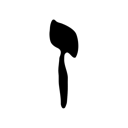 | Zayin | “Z” |
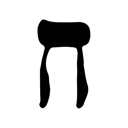 | Chet | “CH” as in Scottish loch or German Bach |
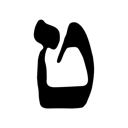 | Tet | “T” |
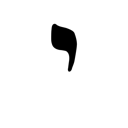 | Yod | “Y”; after a consonant often read as “I” |
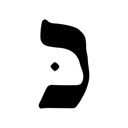 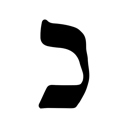 | Kaf / Chaf | “K” with a dot (כּ) / “CH” without |
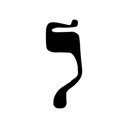 | Lamed | “L” |
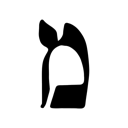 | Mem | “M” |
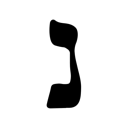 | Nun | “N” |
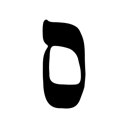 | Samech | “S” |
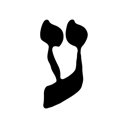 | Ayin | almost silent in modern Hebrew; you hear the vowel under it |
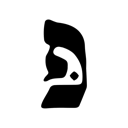 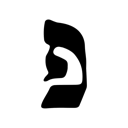 | Pe / Fe | “P” with a dot (פּ) / “F” without |
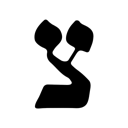 | Tsadi | “TS” as in cats |
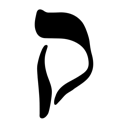 | Kuf | “K” |
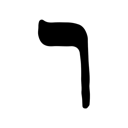 | Resh | “R” (guttural, like French) |
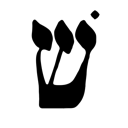 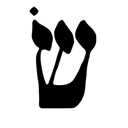 | Shin / Sin | “SH” with a dot on the right (שׁ) / “S” with a dot on the left (שׂ) |
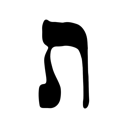 | Tav | “T” |
Note that Hebrew has two letters for “T” (ט and ת), two for “K” (כּ and ק), two for “S” (ס and שׂ) and two for “CH” (ח and כ). They sound the same and differ only in spelling, so words have to be memorised together with their letters.
Final letters
Five letters are written differently at the end of a word. The sound stays the same, only the shape changes.
| Regular | Final | Example |
|---|---|---|
| כ | ך | מֶלֶךְ (mElech) – king |
| מ | ם | שָׁלוֹם (shalOm) – peace, hello |
| נ | ן | בֵּן (ben) – son |
| פ | ף | כֶּסֶף (kEsef) – money |
| צ | ץ | אֶרֶץ (Erets) – country, land |
Vowel points (nikud)
Vowels are marked with dots and dashes under, above or inside the letters. The system is called nikud (נִקּוּד). Newspapers, books and street signs have no vowel points, but textbooks, dictionaries, children’s books and this app do. Modern Hebrew has only five vowel sounds: A, E, I, O, U. Different marks for the same sound are read identically.
| Mark | Name | Sound | Example |
|---|---|---|---|
| בָ | kamatz | “A” | שָׁלוֹם (shalom) |
| בַ | patach | “A” | יַלְדָּה (yalda) – girl |
| בֶ | segol | “E” | סֵפֶר (sefer) – book |
| בֵ | tsere | “E” | בֵּן (ben) – son |
| בִ | chirik | “I” | מִשְׁפָּחָה (mishpacha) – family |
| בֹ | cholam | “O” | כֹּל (kol) – all, every |
| בוֹ | cholam with vav | “O” | טוֹב (tov) – good |
| בֻ | kubutz | “U” | סֻכָּה (suka) – hut |
| בוּ | shuruk | “U” | הוּא (hu) – he |
| בְ | shva | a short “E” or silent | שְׁתַּיִם (shtayim) – two |
There are also “shortened” marks called chataf (אֲ, אֱ, אֳ). They appear only under the guttural letters (א ה ח ע) and are read as a very short A, E, O: אֲנִי (ani) – I, אֱמֶת (emet) – truth.
When the shva is pronounced
The shva (ְ) marks either no vowel at all or a short “E”. Two rules are enough for a beginner:
- A shva at the beginning of a word and the first of two shvas in a row is read as a short “E”: בְּרָכָה (beracha) – blessing, יִלְמְדוּ (yilmedu) – they will learn.
- A shva at the end of a syllable or of a word is silent: יִלְמַד (yilmad) – he will learn, אַתְּ (at) – you (f).
In everyday speech an initial shva is often swallowed altogether: שְׁנַיִם sounds like “shnayim”, גְּדוֹלִים like “gdolim”. That is how the transliteration in this app is written.
Dagesh: the dot inside a letter
A dot inside a letter is called a dagesh. For pronunciation it matters only in three letters: בּ = B (V without the dot), כּ = K (CH without), פּ = P (F without). Remember the rule: at the beginning of a word these letters almost always have the dagesh (בַּיִת – bayit, כֶּסֶף – kesef, פֶּה – pe), while after a vowel inside a word they do not (אָבִיב – aviv, סֵפֶר – sefer). In every other letter the dagesh does not change the reading: סֻכָּה is simply “suka”.
Reading without vowel points
Ordinary text has no vowel points, and the letters ו and י are used to hint at vowels. They are called “mothers of reading”.
| Letter | What it stands for | Example |
|---|---|---|
| ו | “O” or “U” inside a word | שולחן (shulchan) – table, טוב (tov) – good |
| י | “I”, less often “E” | דירה (dira) – flat, בית (bayit) – house |
| ה at the end | “A”, less often “E” | מורה (mora / more) – teacher (f / m) |
| וו, יי | a doubled letter = the consonant V or Y | תקווה (tikva) – hope, בניין (binyan) – building |
That is why the same word can look longer in a text than in the dictionary: כֹּל is written כול, סֻכָּה becomes סוכה. This is the so-called “full spelling”, the one used in newspapers and messages.
Stress
In most words the stress falls on the last syllable: שָׁלוֹם (shalOm), יַלְדָּה (yaldA), מִשְׁפָּחָה (mishpachA). The main exception is the group of words with two segols (the sEfer pattern): סֵפֶר (sEfer), יֶלֶד (yEled), בֹּקֶר (bOker), stressed on the first syllable. The stress also stays before the endings ־תִּי, ־נוּ of the past tense (כָּתַבְתִּי – katAvti) and in the dual (יָדַיִם – yadAyim).
Writing direction
Hebrew is written and read from right to left: letters, words and punctuation. Numbers, however, are written left to right as usual: 2026 is 2026. In mixed text (Hebrew with Latin letters or digits) the eye has to learn to “jump” direction, and that is one of the main difficulties of the first weeks.
Root and pattern
Almost every Hebrew word is built on a root of three consonants. The root carries the general meaning, while vowels, prefixes and suffixes (the pattern) refine it. The root כ־ת־ב is about writing:
- כָּתַב (katav) – he wrote;
- כּוֹתֵב (kotev) – writes;
- מִכְתָּב (michtav) – a letter;
- כְּתֹבֶת (ktovet) – address;
- כַּתָּב (katav) – reporter.
When you meet an unknown word with a familiar root, you already have a rough idea of what it means. The patterns of verbs are called binyanim (chapter 10), the patterns of nouns mishkalim (chapter 2).
What to remember
- 22 letters, all consonants; five of them change shape at the end of a word.
- Five vowel sounds; the vowel marks are not written in ordinary text, and the letters ו and י hint at vowels instead.
- The dot inside ב כ פ changes the sound: B/V, K/CH, P/F.
- Stress is usually on the last syllable, except in words like sEfer.
- Word = root + pattern; the root unlocks the meaning of a whole family of words.
Practise this in the app. In Shoresh every textbook topic comes with trainers: verb conjugation, tenses, binyanim, the imperative and choosing the right word in a sentence.